Jan 10 2026

Settling the Stomach: Gentle, Nutrient-Dense Recipes for GLP-1 Users

Published by under Macrobiotic

⚠️ Allergy & Safety Note:

Please be mindful of ingredients if you have seasonal allergies. For example, individuals with Ragweed sensitivity may react to chamomile due to Oral Allergy Syndrome. Always consult your doctor before trying new herbal remedies.

GLP-1 Nutrition: Gentle Comfort & Balance

Managing appetite and digestion on GLP-1 medications often requires a flexible approach. Sometimes you need nutrient density to fuel your body, and other times you need simple, soothing foods to settle your stomach.

What is the Macrobiotic Diet?

You’ll notice the second recipe below is inspired by the “Macrobiotic” category from the Taste Odyssey archives. The Macrobiotic diet is a philosophy of eating that focuses on balance (Yin and Yang) and harmony with nature. It emphasizes:

  • Whole Grains: Brown rice, barley, and oats make up a large portion of the plate.
  • Local & Seasonal Vegetables: Eating what grows in your climate.
  • Minimal Processing: avoiding refined sugars and chemicals.
  • Digestive Health: Using natural roots and fermented foods to maintain gut balance.

1. Apple, Chicken, and Stilton Salad (The Nutrient Booster)

This salad is designed for days when your appetite is good but capacity is low. It maximizes nutrition with every bite—lean protein for muscle maintenance and fruit for natural energy.

Digestive Tip: If your stomach is feeling sensitive to raw fiber, peel the apple before slicing, or swap the raw apple for a spoonful of unsweetened applesauce mixed into the dressing.

Ingredients:

  • The Green Base: 4 cups mixed greens (Spinach or Butter Lettuce are softer and gentler than Kale)
  • Protein: 2 grilled chicken breasts, sliced (approx. 4-6 oz per serving)
  • Fiber: 1 large Granny Smith or Fuji apple, cored and sliced
  • Flavor: 2 oz Stilton cheese (adds richness without needing heavy creamy dressings)
  • Dressing: 1 tbsp olive oil + 1 tbsp apple cider vinegar

Instructions:

  1. Wash and dry the greens thoroughly.
  2. Toss greens with the sliced apples.
  3. Top with warm grilled chicken (warm food is often more comforting to the stomach than ice-cold food).
  4. Crumble the Stilton cheese on top.
  5. Drizzle lightly with oil and vinegar just before serving.

2. Gentle “Macro” Rice Bowl with Kuzu Sauce (The Stomach Soother)

This recipe utilizes white rice and carrots for a meal that is very easy to digest. It features Kuzu (or Kudzu), a traditional starch root highlighted in Taste Odyssey’s archives. When cooked, Kuzu creates a thick, velvety sauce that coats and soothes the stomach lining.

Ingredients:

  • The Grain: 1 cup cooked white rice or soft-boiled brown rice (White rice is lower fiber and easier on a sensitive stomach)
  • The Veggies: 1/2 cup cooked carrots (boiled until very soft and sweet)
  • The Soothing Sauce (Kuzu):
    • 1 cup cold water or vegetable broth
    • 1 tbsp Kuzu root starch (dissolve in cold water first) OR Cornstarch/Arrowroot powder
    • 1 tsp Umeboshi paste or a pinch of sea salt (helps replenish electrolytes)

Instructions:

  1. Prepare the rice so it is soft and moist.
  2. Make the Sauce: In a small pot, dissolve the Kuzu starch in cold water/broth *before* turning on the heat (this prevents clumps).
  3. Bring to a gentle simmer, stirring constantly. The liquid will turn from milky to clear and thicken into a gel-like consistency.
  4. Stir in the Umeboshi paste or salt.
  5. Pour the warm, thickened sauce over the rice and carrots.
  6. Eat slowly and enjoy the warmth.

Comments Off on Settling the Stomach: Gentle, Nutrient-Dense Recipes for GLP-1 Users

Feb 09 2014

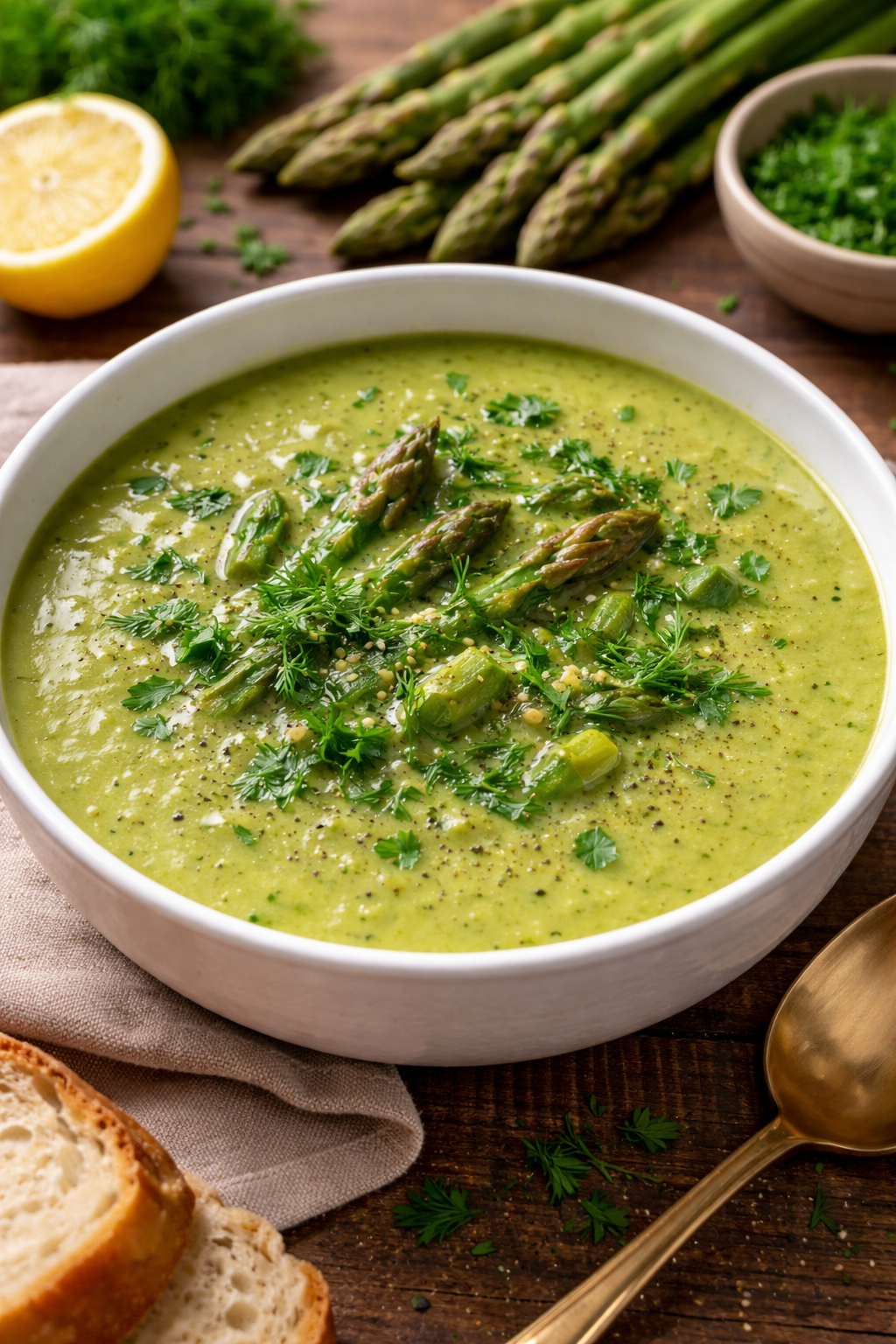
Recipe: Powerfully Magical Asparagus Dill Soup

Published by under Recipes

Recipe

Makes: about 6 bowls
Tools: pot, blender (Vitamix or immersion blender)

Ingredients

  • 4 Tbsp grapeseed oil
  • 1 large onion, diced
  • 2 celery stalks, diced
  • 2–4 garlic cloves, minced
  • 1.5–2 lb asparagus (about 2 bunches)
  • 1 rutabaga, peeled and diced (about 3/4-inch)
  • 6 cups low-sodium chicken broth
  • 1 bay leaf (optional)
  • 1 big handful dill
  • 1 big handful Italian parsley
  • Black pepper
  • Salt, to taste
  • 1–2 Tbsp lemon juice (or a little zest)

Optional finishes (pick one)

  • 1–2 tsp white miso (stir in off heat)
  • 1/2 cup cooked white beans (blend in for creaminess)
  • Plain Greek yogurt (swirl into each bowl)

Steps

  1. Prep the asparagus.
    Snap off woody ends.
    Slice stalks.
    Keep tips separate.
  2. Heat grapeseed oil in a pot on medium.
    Add onion and celery with a pinch of salt.
    Cook 10–12 minutes, stirring, until soft and sweet.
  3. Add garlic.
    Cook 30–60 seconds.
  4. Add sliced asparagus stalks (not the tips yet).
    Cook 2–3 minutes.
  5. Add rutabaga.
    Stir 1–2 minutes so it warms through.
  6. Add broth and bay leaf.
    Bring to a simmer.
    Simmer 15–20 minutes until the rutabaga is very tender.
  7. Add asparagus tips.
    Simmer 2–4 minutes, just until tender.
  8. Turn off heat.
    Remove bay leaf.
  9. Chop herb stems and herb leaves separately.
    Stir chopped dill stems and parsley stems into the pot.
    Rest 5 minutes.
  10. Blend until smooth.
    Let it cool a bit first if you’re using a sealed high-speed blender.
  11. Return to pot.
    Stir in lemon juice, lots of black pepper, and the dill fronds + parsley leaves.
    Add salt only after blending and tasting.
  12. If using miso, stir it in off heat.
    If using beans, blend them in.
    If using yogurt, swirl it into each bowl.

Nutritional highlights

  • High vitamin K.
    One cup raw asparagus (134 g) has about 56 mcg vitamin K (about 46% DV).
  • Good folate.
    One cup raw asparagus has about 70 mcg folate (about 17% DV).
  • Fiber and gut support.
    Asparagus has inulin, a prebiotic carb that feeds helpful gut bacteria.
  • Antioxidants.
    Vitamin C, beta-carotene, vitamin E, and glutathione in asparagus.
  • Plant compounds tied to inflammation pathways.
    Asparagus saponins and flavonoids as part of its anti-inflammatory profile.

Allergy and medication precautions

  • Asparagus allergy exists.
    It can show up as contact reactions from handling, or IgE-type reactions in some people.
    If asparagus has ever caused hives, swelling, wheeze, or itching, treat this soup as a small test portion.
  • Celery allergy cross-reactivity matters.
    If you react to celery or certain pollens, you may also react to Apiaceae herbs and spices (parsley is a classic one).
  • Warfarin and vitamin K.
    If you take warfarin (Coumadin), keep vitamin K intake steady day to day.
    This soup can push vitamin K up fast.

Substitutions

  • Oil: avocado oil works well; olive oil works at lower heat.
  • Broth: vegetable broth works; add miso or a splash of soy sauce for depth.
  • Rutabaga: cauliflower florets, parsnip, or Yukon gold potato.
  • Dill: tarragon or chives.
  • Creaminess: white beans or silken tofu blended in; yogurt swirled per bowl.
  • Lower oil option: use 2 Tbsp oil and add a splash of broth while sautéing if the pot looks dry.

Sources

Comments Off on Recipe: Powerfully Magical Asparagus Dill Soup

Aug 13 2012

Recipe: Gluten and Dairy Free Incredibly Easy and Cheezy Mac and Cheese

Published by under Gluten free,Recipes,Vegetarian

So many things I miss since becoming gluten and dairy free, most important of those things is cheese. I find nothing more comforting the ooey gooey taste of Velveeta shells and cheddar, and I have yet to find a good option in the market or in even the nicest food-intolerence-friendly restaurants.

I have discovered the very BEST recipe for Baked Mac-n-Cheeze at The Gluten Free Vegan, which itself was based on a recipe from the Daiya site, as the recipe calls for Daiya cheese. I know this because I searched and searched for something that had just the right combination, and tested several. This was my favorite and no compromises had to be made. This recipe is 100% gluten and dairy free, it only takes about twenty mins to prepare, and will have everyone who tries ask for thirds, never mind not realizing there is no dairy in the entire dish. I made this version my way, but as long as you have the key ingredients feel free to add or remove any types of spices or flavors you may enjoy. Bon Appetit!

Gluten and dairy free mac and cheese - photo Copyright 2012 TasteOdyssey.com. All Rights Reserved

Gluten and Dairy Free Incredibly Easy and Cheezy Mac and Cheese

What you need:

  • A package of any flour of Gluten-free (brown rice) noodles you prefer. I used Gluten Free pasta shells
  • 3 tablespoons vegan margarine
  • 1 tablespoon nutritional yeast (had to search around for this, but ultimately found it at Whole Foods, Bragg’s makes it and it’s yellow and has a cheese-like taste. Note: this is not the same as Brewer’s Yeast which tastes nutty and is brown.)
  • 1/4 teaspoon fresh ground black pepper
  • Garlic power to taste
  • 2 cups unsweetened non-dairy milk (soy or almond milk based on your preference)
  • 3 cups Daiya shreds
  • 1/2 cup gluten-free and vegan bread crumbs
  • 1/4 teaspoon paprika

What you need to do:

  1. Preheat oven to 350°F.
  2. In a medium saucepan, over medium heat, melt vegan margarine.
  3. Add nutritional yeast and black pepper.
  4. Pour in non-dairy milk and add Daiya shreds.
  5. Whisk to mix and reduce heat to medium-low–(make sure you keep the burner on a medium low, so you don’t over cook the sauce)
  6. Continue to whisk occasionally while shreds melt and sauce becomes nice and smooth
  7. Once the sauce is smooth and heated-through, pour over pasta.
  8. Pour into a casserole dish.
  9. Mix up the bread crumbs, garlic powder (my added touch), and paprika then sprinkle on top.
  10. Bake for ten to fifteen minutes in preheated oven until sauce is bubbling and topping browns a little.
  11. Remove from oven and savor the moment. (I added some Louisiana hot sauce to mine when It was done cooking. It gives it that extra flavorful irristiable kick. My friend added Hunt’s organic Ketchup to his (Hunt’s doesn’t use high fructose corn syrup)

Gluten and Dairy free Mac and Cheese - photo copyright 2012 TasteOdyssey.com. All Rights Reserved

One response so far

May 10 2012

Recipe: Tonic For An Upset Stomach

Well, in this fast-paced world, where we find less and less time for ourselves, we are bound, in spite of best efforts and intentions to get into less than optimal situations for eating the best stuff let alone taking the time to eat it properly. We end up with stressed out bellies and sometimes just need a little something to settle them down, help them detox, digest, and generally just be comforted.

chamomile-tea-tonic

NOTE: The following is not meant to stand in place of any medications you may be taking for pre-exisitng conditions, nor is it a miracle cure. It has not been evaluated be any doctor or nutritionist. It’s just something I make for myself after a lifetime of experimenting with the elements of a perfect belly-soothing tea to help slow things down and mellow out those grumbly, icky, stressed tummy feelings.

Upset Belly Tonic

What You Need:

  • 8-12 oz hot water
  • 1/2 tablespoon dried oregano (while Oregano Oil is extremely powerful in healing, the leaves and flowering stems of the plant are strongly anti-septic, anti-spasmodic, and aid in indigestion, stomach upsets, and painful menstruation conditions)
  • 1/4 teaspoon dried cinnamon or cinnamon stick (cinnamon has been used in traditional medicine for digestive ailments such as indigestion, gas and bloating, stomach upset, and diarrhea)
  • 1/2 teaspoon honey (too much will not help you relax, in half an hour you will be jumping up and down, so this is just to help sweeten)
  • 1/2 organic lemon (really, it should be organic, far more nutritious and filled with flavonoid, a composite that holds antioxidant and anti-cancer properties and helps to prevent diabetes, constipation, high blood pressure, and indigestion among other things.
  • Chamomile tea – either 2 tablespoons loose leaf or a teabag of simple chamomile. German chamomile is preferred. (soothes stomach aches, eases the symptoms of irritable bowel syndrome, promotes elimination, and assists in overall digestion, menstrual cramps and restful sleep)
  • 1/2 inch of sliced fresh ginger (reported to alleviate symptoms from morning sickness, motion sickness and heartburn)

What You Need To Do:

Slice ginger into thin slices.

Place place all ingredients except honey into a teapot, then pour water over them. Squeeze lemon into pot. Let steep 5-7 minutes. Pour and add honey if desired.

This will prove a welcome tonic to aid in digestion, flatulence or otherwise mildly upset stomach.

Note, this might make you sweat just a little. Ginger may raise your body temperature a touch, but in these moderate doses it is unlikely to do so to a degree that will induce sweating. Also, do not add too much oregano as it, along with ginger, is an expectorant. These small amounts should help to calm even the most upset stomach, given that it is only a passing problem. If you have consistent heartburn, lightheadedness that accompanies heartburn or otherwise, you should consult a doctor. Again, please use common sense.

Comments Off on Recipe: Tonic For An Upset Stomach

Mar 11 2012

Food Diva’s All Natural Tangy Tomato Soup with Rice Recipe

Published by under Recipes,Vegetarian

Once in a blue moon, I get an intense craving for a warm delicous bowl of tangy, savory, tomato soup.  I wanted to share a recipe for what is one of the best-known and loved staples of American pop culture, because when these cravings arise I can never find a healthy canned option in the supermarket; there is either too much sodium, or high fructose corn syrup, or other artificial additives that I don’t want to ingest.

So as a gift to others who may have the same craving, I decided to share with you a recipe I found back in 1999 in Low Calorie/Low Fat Recipes magazine and have slightly modified to satisfy my most staunch desires and more closely resemble a version my grandma used to make and for which I have found only one restaurant in LA that comes close to matching it. I hope you enjoy, and feel free to write with any suggestions or alternative ways you may have made yours.

Food Diva’s All Natural Tomato Soup

What you need:

  • Olive Oil (I use about a teaspoon)
  • 3-4 minced garlic cloves
  • 1 medium onion chopped finely
  • 2 stalks of chopped celery
  • 1 tablespoon grated gingerroot
  • 3 14 1/4 ounce cans diced tomatoes
  • 2 cans low sodium chicken broth
  • 3 ounces (or a half a 6 oz can) of tomato paste
  • 1 teaspoon of sugar
  • 1 tablespoon of lemon juice
  • 1 tablespoon balsamic vinegar
  • 1 cup cooked basmati rice
  • Food Processor or Blender

*optional – light dairy sour cream, reduced fat pesto, fresh thyme sprig, basmati rice

What to do:

Separately prepare rice per instructions, typically 2 parts water to one part rice, bring to a boil then lower to simmer, covered, until water has evaporated and rice can be fluffed with a fork (do not overcook).

Grab a large pot and heat the olive oil in it.  Adding the ginger, celery,onion, garlic for 1-2 minutes or until the fragrance opens (NOT BROWNS).

DRAIN THE TOMATOES

Add the tomatoes, tomato paste, broth, and sugar.

Cook uncovered for 20 minutes.

Next take 4 cups of the soup and place in blender or food processor. Blend until smooth. Return the remaining puree to the pot and heat until completely hot but not boiling.

When it is time to serve stir in lemon juice and balsamic vinegar to bring all the flavors together. Add a cup of cooked rice to the cooling soup for extra texture (a trick I learned from my grandmother).

For an added bonus, garnish with a dollop of pesto and float a thyme sprig on top.

Pour into bowls and enjoy!

It should make about 9 servings and in my opinon even tastes delicious cold.

Comments Off on Food Diva’s All Natural Tangy Tomato Soup with Rice Recipe

Next »