Recipe
Makes: about 6 bowls
Tools: pot, blender (Vitamix or immersion blender)
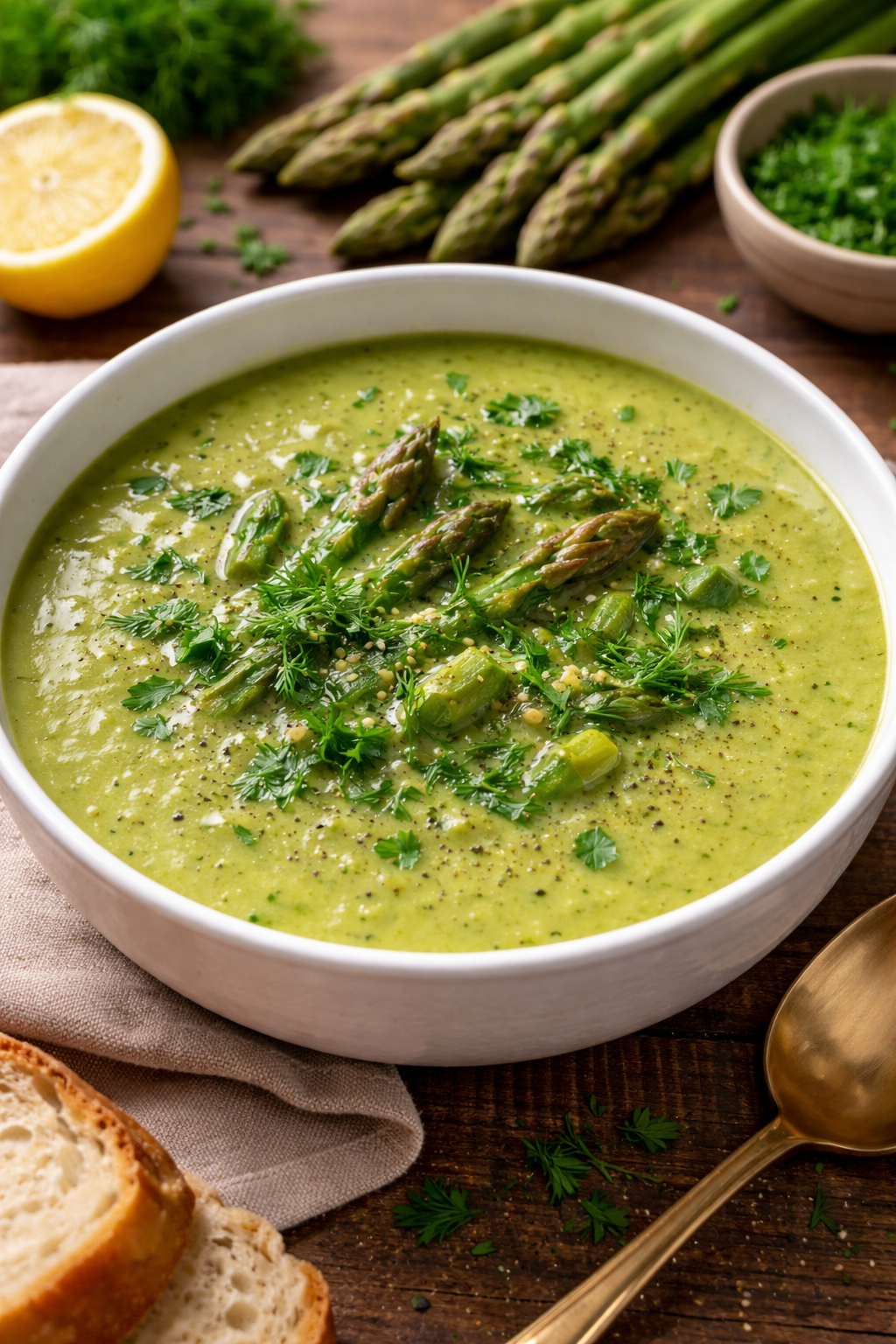
Ingredients
- 4 Tbsp grapeseed oil
- 1 large onion, diced
- 2 celery stalks, diced
- 2–4 garlic cloves, minced
- 1.5–2 lb asparagus (about 2 bunches)
- 1 rutabaga, peeled and diced (about 3/4-inch)
- 6 cups low-sodium chicken broth
- 1 bay leaf (optional)
- 1 big handful dill
- 1 big handful Italian parsley
- Black pepper
- Salt, to taste
- 1–2 Tbsp lemon juice (or a little zest)
Optional finishes (pick one)
- 1–2 tsp white miso (stir in off heat)
- 1/2 cup cooked white beans (blend in for creaminess)
- Plain Greek yogurt (swirl into each bowl)
Steps
-
Prep the asparagus.
Snap off woody ends.
Slice stalks.
Keep tips separate. -
Heat grapeseed oil in a pot on medium.
Add onion and celery with a pinch of salt.
Cook 10–12 minutes, stirring, until soft and sweet. -
Add garlic.
Cook 30–60 seconds. -
Add sliced asparagus stalks (not the tips yet).
Cook 2–3 minutes. -
Add rutabaga.
Stir 1–2 minutes so it warms through. -
Add broth and bay leaf.
Bring to a simmer.
Simmer 15–20 minutes until the rutabaga is very tender. -
Add asparagus tips.
Simmer 2–4 minutes, just until tender. -
Turn off heat.
Remove bay leaf. -
Chop herb stems and herb leaves separately.
Stir chopped dill stems and parsley stems into the pot.
Rest 5 minutes. -
Blend until smooth.
Let it cool a bit first if you’re using a sealed high-speed blender. -
Return to pot.
Stir in lemon juice, lots of black pepper, and the dill fronds + parsley leaves.
Add salt only after blending and tasting. -
If using miso, stir it in off heat.
If using beans, blend them in.
If using yogurt, swirl it into each bowl.
Nutritional highlights
-
High vitamin K.
One cup raw asparagus (134 g) has about 56 mcg vitamin K (about 46% DV). -
Good folate.
One cup raw asparagus has about 70 mcg folate (about 17% DV). -
Fiber and gut support.
Asparagus has inulin, a prebiotic carb that feeds helpful gut bacteria. -
Antioxidants.
Vitamin C, beta-carotene, vitamin E, and glutathione in asparagus. -
Plant compounds tied to inflammation pathways.
Asparagus saponins and flavonoids as part of its anti-inflammatory profile.
Allergy and medication precautions
-
Asparagus allergy exists.
It can show up as contact reactions from handling, or IgE-type reactions in some people.
If asparagus has ever caused hives, swelling, wheeze, or itching, treat this soup as a small test portion. -
Celery allergy cross-reactivity matters.
If you react to celery or certain pollens, you may also react to Apiaceae herbs and spices (parsley is a classic one). -
Warfarin and vitamin K.
If you take warfarin (Coumadin), keep vitamin K intake steady day to day.
This soup can push vitamin K up fast.
Substitutions
- Oil: avocado oil works well; olive oil works at lower heat.
- Broth: vegetable broth works; add miso or a splash of soy sauce for depth.
- Rutabaga: cauliflower florets, parsnip, or Yukon gold potato.
- Dill: tarragon or chives.
- Creaminess: white beans or silken tofu blended in; yogurt swirled per bowl.
- Lower oil option: use 2 Tbsp oil and add a splash of broth while sautéing if the pot looks dry.